CARF accreditation is the one behavioral health trust signal a competitor cannot copy quickly. Anyone can rewrite a website, launch a campaign or claim an outcome by Friday. Accreditation takes months of preparation, costs real money, and ends with an outside body walking the building and interviewing the people in it.
That asymmetry is the whole argument. It is also, in almost every program we look at, printed once in a footer and never raised again.
Key takeaways
Four figures, two from the accreditors and two from our portfolio.
| Finding | Figure | What it means for a program |
|---|---|---|
| Referral share of admissions | 17.0% | 109 of 643 admissions, the largest confirmed nonpaid source and the audience accreditation moves most |
| Ceiling on paid share | 39% | $618 blended against $1,600 paid, so most of census has to arrive on trust rather than budget |
| Best CARF term available | Three years | CARF decision options run from Three Year down to Nonaccreditation |
| Joint Commission term | Three years | The behavioral health award is always for a three year term |
The portfolio figures come from 37,200+ tracked admissions and $64M+ in managed Google and Meta media since 2018, with definitions in the 2026 Behavioral Health Patient Acquisition Report, and the channel split is from five programs measured between 16 March and 11 September 2026. Every external claim here is sourced to a document CARF or the Joint Commission published.
In this article
- What CARF accreditation is and who CARF accredits
- How Joint Commission behavioral health accreditation differs
- What the survey involves and how long accreditation lasts
- Where accreditation sits against licensure and payer contracting
- Why accreditation is the trust signal nobody can copy in a week
- Why accreditation earns more with referrers than with families
- What accreditation does not prove
- How to market an accreditation a program already holds
- Questions operators ask
What CARF accreditation is and who CARF accredits
An independent review against published standards. CARF International, established in 1966, describes itself as an independent nonprofit accreditor of health and human services. Accreditation means a program was surveyed against the standards for the services it delivers and found to conform.
The part that matters here is scope. CARF accredits seven areas and behavioral health is one. The others are aging services, child and youth services, employment and community services, medical rehabilitation, opioid treatment and vision rehabilitation, and CARF reports more than 9,600 service providers and 68,300 accredited programs across all of them.
So most of the search demand around the term is not behavioral health demand. Some is senior living, some vocational rehabilitation. A treatment center writing a general accreditation explainer is competing for an audience that mostly cannot become a patient or a referrer.
Inside behavioral health the manual covers roughly thirty program types, from inpatient and residential through partial hospitalization, intensive outpatient, withdrawal management and crisis services, with specialty designations for populations such as eating disorders and adolescents. CARF is explicit that accreditation is based on the services provided and is not intended to be certification, licensing or site inspection.
How Joint Commission behavioral health accreditation differs
Different manual, fixed term, broader regulatory recognition. The Joint Commission accredits behavioral health care and human services organizations under its Comprehensive Accreditation Manual for Behavioral Health Care, a separate standards set from CARF's.
| Dimension | CARF | The Joint Commission |
|---|---|---|
| Fields accredited | Seven areas, behavioral health one of them | Several care settings, behavioral health one of them |
| Decision outcomes | Three Year, One Year, Provisional, Nonaccreditation | Always a three year term |
| Survey notice | Organization picks a two month window, no surprise visits | Announced, at least 30 days notice of the exact date |
| Published price | No fee schedule published | $1,700 application deposit published, total quoted individually |
| Behavioral health scale | 68,300+ programs across all seven areas | 3,500+ organizations under the behavioral health manual |
| Approved for opioid treatment | Yes, SAMHSA approved | Yes, SAMHSA approved |
Two differences carry commercial weight. The first is the term. A CARF decision can come back as three years, one year, provisional or nonaccreditation, while the Joint Commission states its behavioral health award is always for a three year term. The second is regulatory recognition. The Joint Commission reports that state regulatory agencies recognize its accreditation in all 50 states, the District of Columbia and US territories across more than 250 pieces of legislation, and that it is a condition of reimbursement for certain insurers.
Which body fits a given program is a question for its clinical and compliance leadership, and nothing here answers it. Both appear on SAMHSA's approved list for opioid treatment programs.
What the survey involves and how long accreditation lasts
Months of preparation, then people on site. CARF says preparation may take a year or more, and its sequence runs from a new organization questionnaire through a self evaluation, an application naming a preferred two month window, an invoiced fee, surveyor selection and the survey.
The survey is a peer review. CARF describes it as consultative rather than prescriptive, with surveyors interviewing staff, persons served and families, observing practice and reviewing documentation. The Joint Commission describes a review tracing a person's experience across services and hand offs, typically one surveyor over two to four days.
Neither body runs a one and done check. CARF notifies the decision about six to eight weeks after the survey, issues the certificate within 60 days, and requires a Quality Improvement Plan within 90 days plus an Annual Conformance to Quality Report thereafter. The Joint Commission asks for follow up within 60 days and a Focused Standards Assessment between surveys.
On price, be careful with anyone quoting a number. CARF publishes no fee schedule, saying only that fees are not based on revenue and depend on the number of surveyors and survey days plus travel. The Joint Commission publishes a $1,700 application deposit applied toward its fee, with the total combining a survey fee and an annual fee based on size and complexity. Neither publishes a total price, so any single figure elsewhere is an estimate.
Where accreditation sits against licensure and payer contracting
Three separate things, often confused. A state license is permission to operate. Accreditation is a voluntary review against a private standards set. Payer contracting is a commercial negotiation. None replaces another, and CARF states plainly that its accreditation is not intended to be certification, licensing or site inspection.
The clearest published example of how the three stack sits in federal opioid treatment rules. SAMHSA requires that such a program be state licensed, DEA registered, certified by SAMHSA and accredited by a SAMHSA approved body. Provisional certification lasts up to a year and must be followed by accreditation inside that window.
Outside opioid treatment the picture varies by state and by payer, which is why this page states no legal conclusion. What the accreditors publish is that the Joint Commission's behavioral health accreditation is recognized by state regulatory agencies in all 50 states and is a condition of reimbursement for certain insurers, and that some payers accept it in place of running their own survey.
Accreditation can open contracts advertising cannot buy, and a program that never raises it in payer conversations is leaving that on the table.
Why accreditation is the trust signal nobody can copy in a week
Because it has a real barrier to entry. Every other trust signal in behavioral health marketing is reproducible quickly by anyone with a budget. A competitor can rebuild a website, buy the same keywords, collect reviews and publish staff credentials inside a quarter.
None of that is true of accreditation. Preparation runs a year or more by the accreditor's own estimate, the fee is real, the survey puts a stranger inside the program for days, and the decision is not certain. A competitor cannot answer your accreditation this month by spending more money this month, which is the definition of a durable advantage.
It also sits in a different category from permission to advertise. LegitScript certification, which has its own page here, is permission to advertise and says nothing about how a program operates. Accreditation is evidence about operations and says nothing about ad eligibility. They are not substitutes.
The waste is universal. Programs that spent a year and a serious sum earning the thing give it a grey footer logo, then argue for a quarter about headline copy a competitor could rewrite over a weekend.
Why accreditation earns more with referrers than with families
Referrers weigh it, families mostly do not. Across the five program sample, referral partners produced 109 of 643 admissions, 17.0 percent, the largest confirmed nonpaid source.
| Channel | Admissions | Share |
|---|---|---|
| Paid search and social | 307 | 47.7% |
| Referral partners | 109 | 17.0% |
| Organic search | 82 | 12.8% |
| Direct or untagged | 29 | 4.5% |
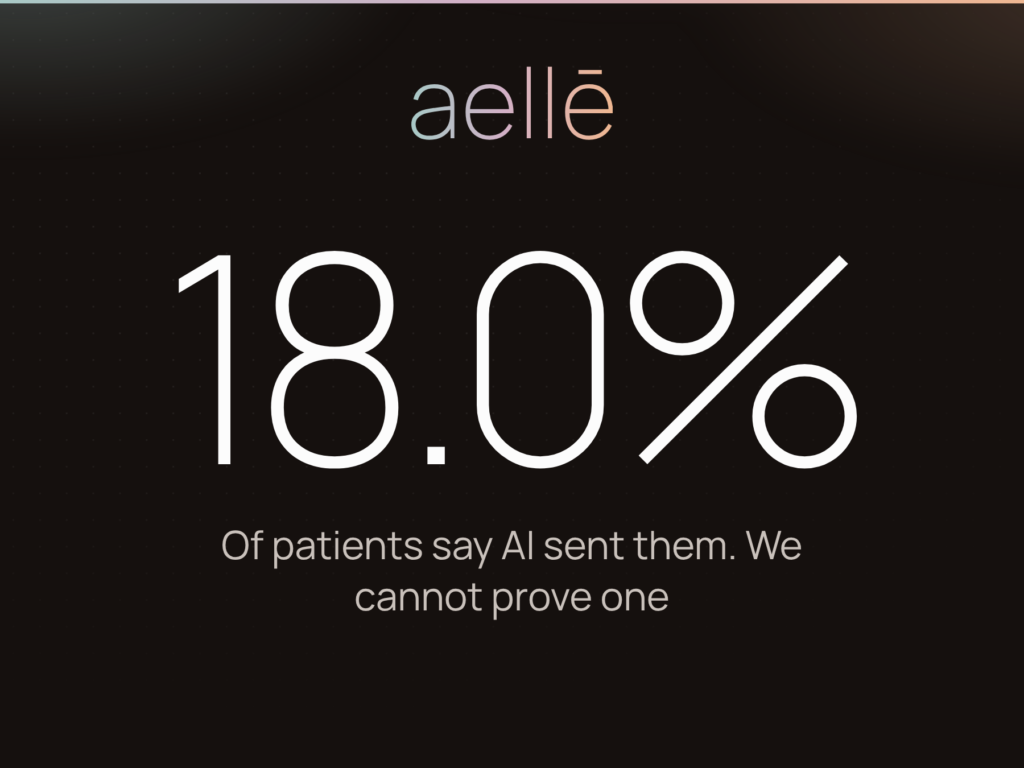
| AI labeled, source unverified | 116 | 18.0% |
| Total | 643 | 100% |
Consider who is on each side. A clinician or case manager deciding where to send someone carries professional exposure for the choice, reads accreditation as a known quantity, and sometimes cannot refer outside an accredited list at all. A family searching at 2am is reading photographs, the phrase that sounds like their situation and whether anyone picks up. Accreditation barely registers there, and no badge placement changes that.
So a program aiming its accreditation message at families is aiming at the weaker audience. The same message written for the person who has to justify a referral works on the channel already producing 17.0 percent of admissions at no media cost. The arithmetic behind what a referral partner is worth per admission is why this is the best use of the credential.
What accreditation does not prove
It is a floor, not an outcome. Accreditation says a program was reviewed against standards of operation and conformed to them. It does not say the program produces better clinical results than an unaccredited one, and neither body claims that it does.
This matters because the temptation runs straight at it. The step from we are accredited to we get better results is short, unsupported, and the kind of claim that draws attention from payers, platforms and regulators. Keep the claim the size of the evidence. A program met an independent standards set, a surveyor confirmed it, here is the term and the date.
It also cannot fix what sits downstream. It will not answer a phone, shorten a wait for an assessment or make an intake coordinator call back, and those decide whether any of this converts.
How to market an accreditation a program already holds
Six steps, none of which require a new budget line.
1. Decide which audience the message is for
Write it for referrers first. That is where accreditation does the work. A referrer wants the body, the term, the expiry, the programs covered and who to call. A family only wants to know the place was checked from outside.
2. Build one real page, not a footer logo
A page naming the accrediting body, the decision and its dates, the programs and locations included, and two sentences on what the survey examined. This is the page a referrer forwards internally. A footer badge cannot be forwarded.
3. Match the claim to the certificate
CARF accreditation is based on the services provided, so pull the certificate and check it line by line against the website. If accreditation covers residential and the site implies the outpatient arm too, fix the site. A referrer who finds that gap stops referring.
4. Correct the public directory entry
The Joint Commission publishes Quality Check, a public lookup searchable by name, city and state, zip code or Joint Commission ID, where a report shows the accreditation decision and its effective date. Referrers and payers check it, so confirm your entry reads correctly.
5. Put it into the referrer conversation on purpose
One page in the introduction email, one line in the capability summary, the term and dates stated rather than implied. The Joint Commission tells accredited organizations to use the seal in marketing materials and on the website, not only at the front desk.
6. Measure it where it converts
Add the referral source to the intake record and count admissions by referrer, not page views. If referral admissions rise over two quarters, the credential is working. Our attribution platform exists because that reconciliation is what nearly every program is missing.
What we do day to day is on the services page, and published results are in our case studies. Or run the six steps yourself. We would rather you owned the asset than rented an opinion about it.
Questions operators ask
What is CARF accreditation?
A review of a provider against published standards by CARF International, an independent nonprofit accreditor of health and human services established in 1966. A surveyor assesses conformance to the standards that apply to the services delivered. CARF accredits seven areas, behavioral health among them, and states that accreditation is based on the services provided rather than being a certification, a license or a site inspection.
How long does CARF accreditation last?
Up to three years. CARF's decision options are Three Year, One Year, Provisional and Nonaccreditation, with a Five Year option limited to Continuing Care Retirement Communities. The decision is notified about six to eight weeks after the survey and maintained through an annual leadership commitment and an Annual Conformance to Quality Report.
What does CARF accreditation cost?
CARF publishes no fee schedule. It states that fees are not based on revenue and depend on the number of surveyors and survey days plus travel. The Joint Commission publishes a $1,700 application deposit applied toward its fee, with the total quoted individually. Any single figure quoted elsewhere is an estimate rather than a published price.
Is accreditation the same as a state license?
No. A state license is permission to operate and accreditation is a voluntary review against a private standards set. Federal opioid treatment rules show the two side by side, since such a program must be state licensed, DEA registered, certified by SAMHSA and accredited by a SAMHSA approved body.
How is Joint Commission behavioral health accreditation different from CARF?
Different standards manual and a fixed term. The Joint Commission accredits under its Comprehensive Accreditation Manual for Behavioral Health Care and states the award is always for a three year term, where a CARF decision can be three years, one year, provisional or nonaccreditation. It also reports recognition by state regulatory agencies in all 50 states and describes its accreditation as a condition of reimbursement for certain insurers.
Does accreditation produce more admissions?
It can, mostly through referrers rather than consumer search, and it is not an outcome claim. Referral partners produced 17.0 percent of admissions in a five program sample of 643, the largest confirmed nonpaid source, and accreditation weighs heavily with clinicians and case managers. What it establishes is that a program met standards of operation. It does not establish better clinical results, and saying otherwise is unsupported.